From aerospace design to hospital wards: Why different perspectives make stronger innovation teams
What happens when a design engineer with experience from NASA and ESA teams up with a medical doctor and a neurobiologist?
At BioMedical Design, we believe that bringing different professional perspectives together is one of the keys to meaningful healthcare innovation. Interdisciplinarity is at the heart of the BioMedical Design Novo Nordisk Foundation Fellowship Programme. Every year, we bring together fellows with backgrounds in medicine, engineering, design, research and other disciplines to explore unmet needs in healthcare.
Each speciality brings a different way of looking at problems. Clinicians contribute with their understanding of patient care and clinical practice. Engineers bring technical expertise and systematic problem-solving skills, while designers are trained to understand user needs, visualise complex challenges and develop ideas through prototyping.
But the real strength emerges when these perspectives meet, challenge each other and create new ways of understanding a problem.
A buddy system across hospitals
During the first phase of the fellowship, our fellows spend several months immersed in clinical environments, observing everyday life in hospitals to identify unmet clinical needs.
For fellows without a clinical background, stepping into a hospital can be like entering an entirely new world. Medical terminology, clinical procedures and complex workflows are not always easy to understand.
That’s why we have introduced a buddy system, pairing fellows with clinical and non-clinical backgrounds across different hospitals.
The idea is simple: Give fellows someone to turn to when they need to understand what they are observing, challenge an assumption or explore whether a problem exists beyond their own hospital.
And the learning goes both ways.
From NASA and ESA to healthcare innovation
One of the fellows benefiting from the buddy system is Paul G. Topf Aguiar De Medeiros, a design engineer with a rather unusual background for someone observing daily life in a Danish hospital.
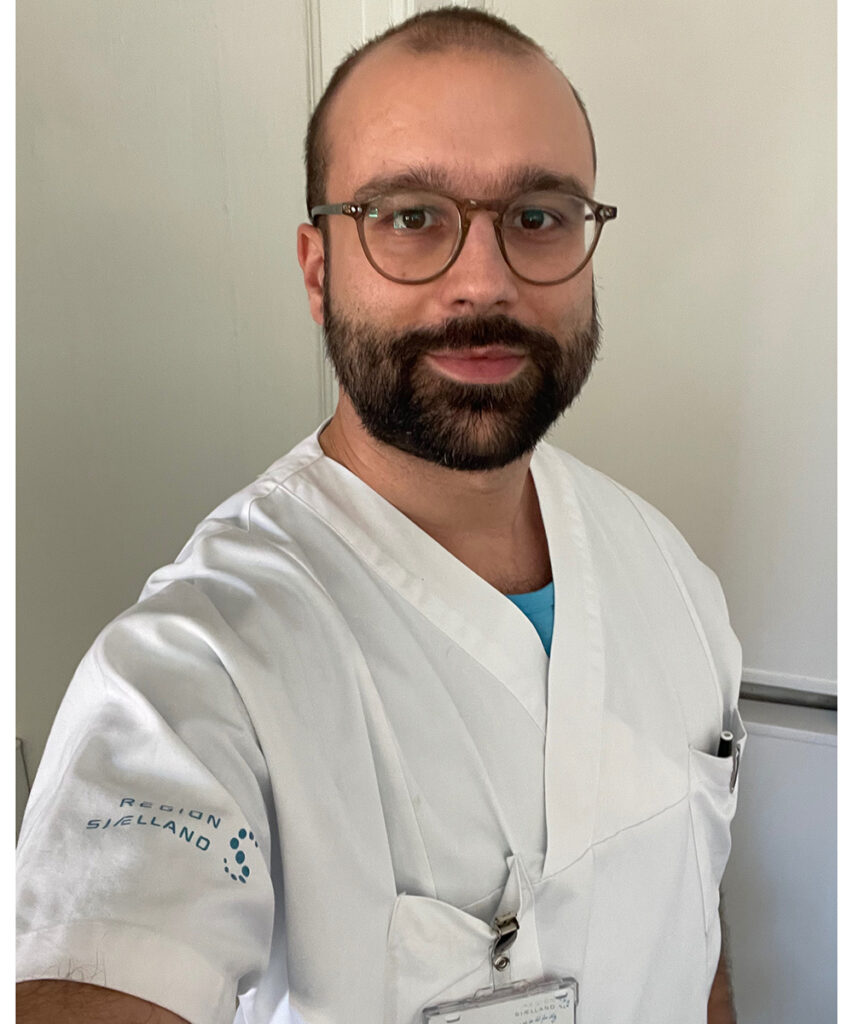
Before joining BioMedical Design, Paul worked with user-centred design of crew systems for NASA and ESA. He has also developed furniture for the iconic Danish brand FDB Møbler, where he became responsible for the company’s sustainability strategy.
But despite his extensive experience in design and innovation, healthcare is new territory.
“I have no professional experience in clinical settings. The opportunity to do real-world clinical observations is one of the main reasons I was interested in this programme. That, and gaining experience with the standards and processes involved in developing regulated medical devices from concept to production,” Paul explains.
Three fellows, three hospitals, different perspectives
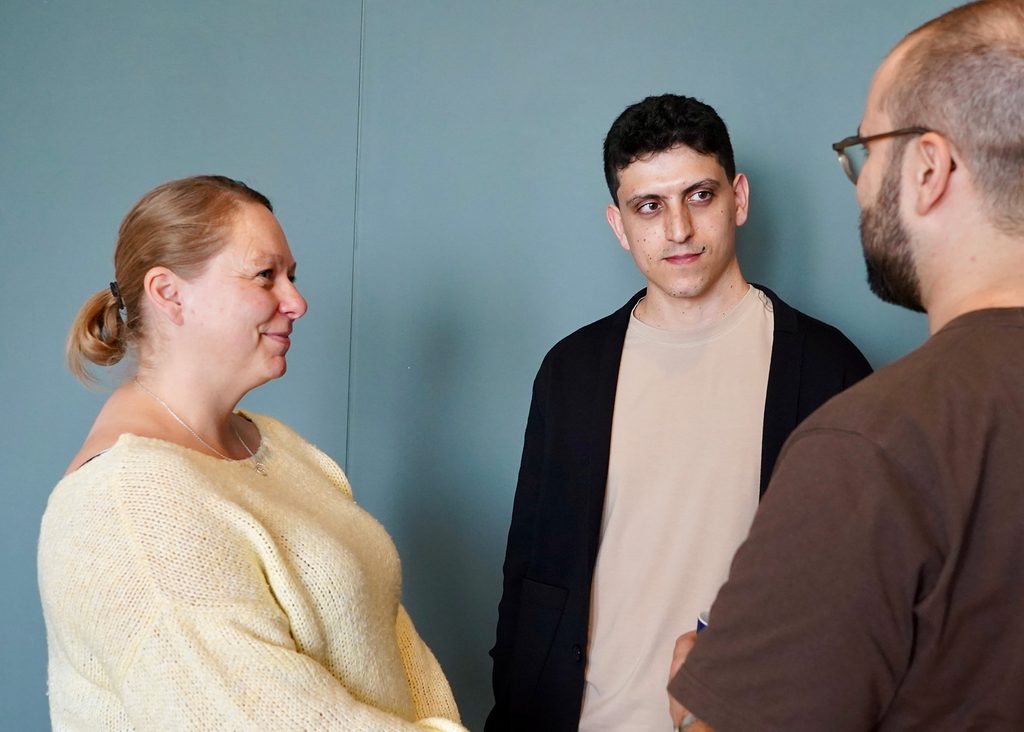
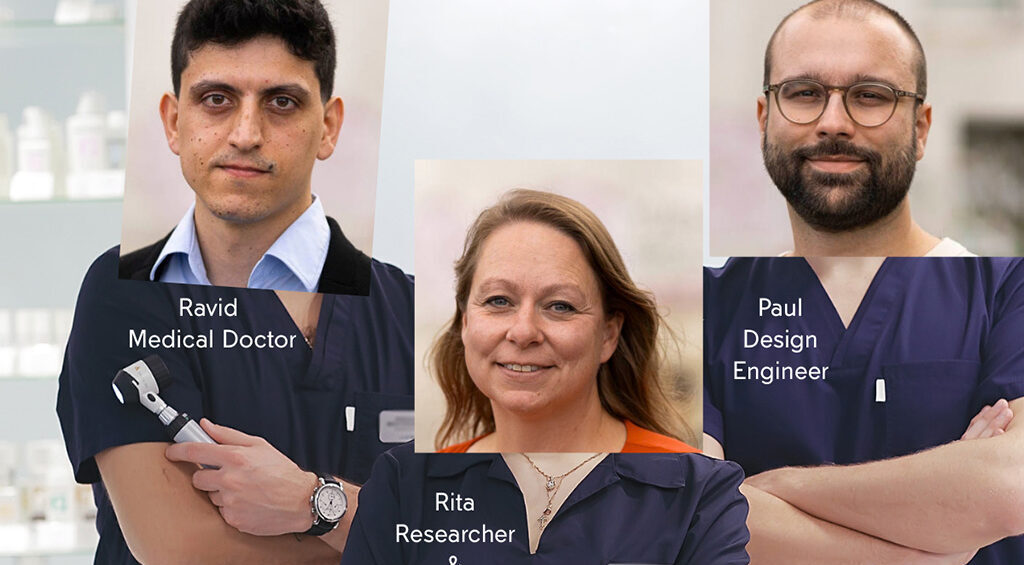
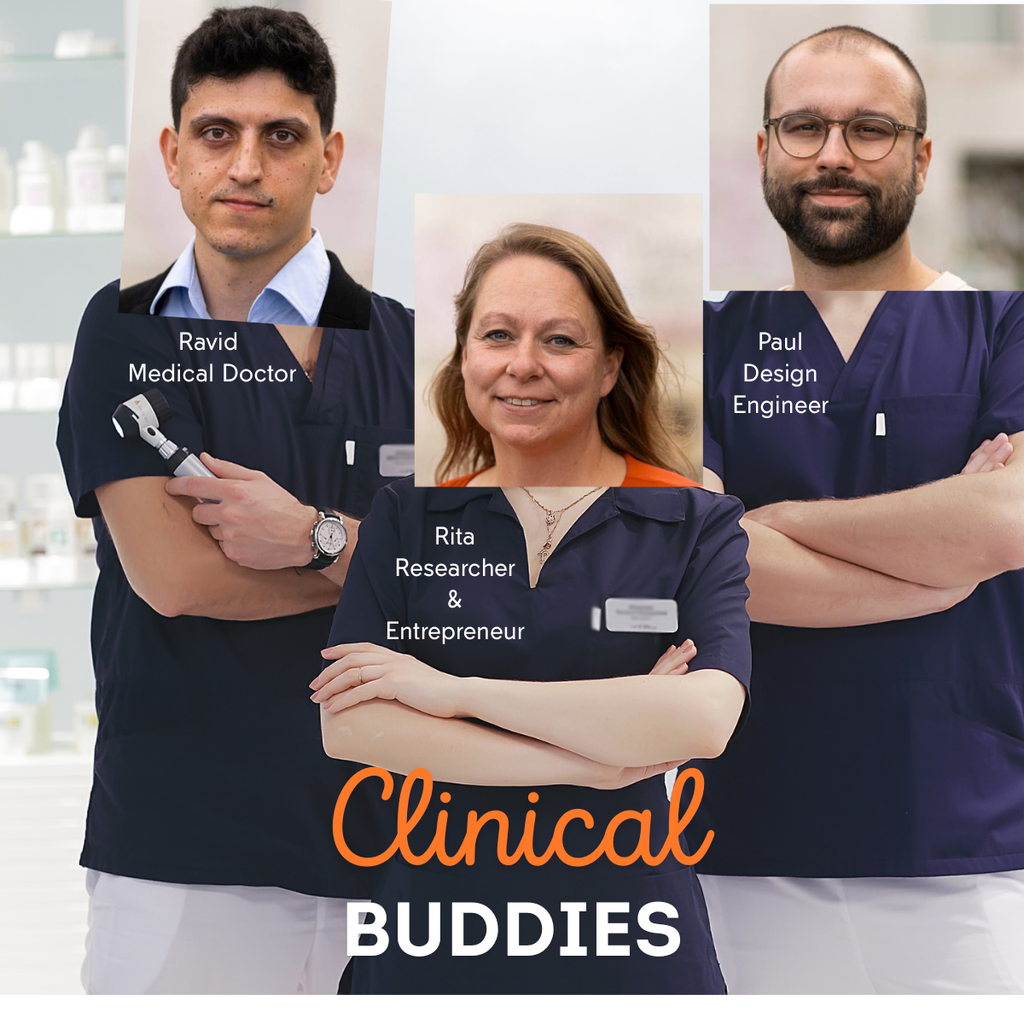
Paul’s buddy team includes Rita and Ravid, whose professional backgrounds complement his own.
Rita is a regulatory expert and entrepreneur with a PhD in neurobiology, while Ravid is a medical doctor with international clinical experience and an in-depth understanding of healthcare systems.
Together, they bring a broad range of expertise to their discussions.
“We all have very different professional backgrounds, so we are able to help each other out – answering questions and challenging each other based on our individual perspectives,” Paul says.
“Rita and Ravid are able to answer all of my questions regarding medical device development, research and clinical insights. They both bring extremely deep knowledge in my areas of interest, and it’s a huge advantage.”
But the buddy system offers more than access to different professional expertise.
Because the three fellows are based at different hospitals in Denmark, they can also compare observations across clinical environments.
“We talk about our observations in three different hospitals, allowing us to rapidly explore how our individual observations relate to other environments.”
Is the problem the same at another hospital?
One of the central principles of needs-driven innovation is to understand whether an observed challenge is an isolated problem or part of a broader unmet need.
And this is where the buddy system becomes particularly valuable.
Even during their first weeks of clinical immersion, Paul and his buddies have noticed differences in how hospitals organise their work and approach similar challenges.
“From the beginning, we have discovered ways in which the hospitals do things differently, and we are able to share knowledge in each other’s areas of interest when we observe something relevant locally,” Paul explains.
The team is also exploring opportunities to visit Odense University Hospital (OUH), where Rita is based.
As a university hospital, OUH has access to a wider range of specialised departments than the fellows’ local hospitals. Comparing these environments could provide valuable insights into challenges and practices that might also be relevant elsewhere.
Learning goes both ways
While Paul benefits from his buddies’ clinical and regulatory knowledge, he also brings valuable experience to the team.
Needs-driven design, the core methodology of the BioMedical Design fellowship, is something he knows well from his previous work in the aerospace industry.
“Need-driven design is something I have worked with extensively throughout my work in the aerospace industry. This allows me to provide a bit more context or give some ideas on how to look at a problem when we talk about what we are working on. That’s how I can help them in return.”
And perhaps that is the greatest strength of an interdisciplinary team.
No one has all the answers. But by bringing different experiences, questions and ways of thinking to the table, the fellows can develop a deeper understanding of the challenges they encounter.
Because meaningful healthcare innovation doesn’t necessarily begin with someone who knows the healthcare system best. Sometimes, it begins with someone who asks a completely different question.